

So, you’ve embarked on your journey of learning to horseback ride and you’re looking for helpful beginner horseback riding tips to develop your skills. To start, congratulations! As lifelong equestrians, we’re excited to have you join our magical world. Horseback riding is an exhilarating experience, offering a unique blend of connection with nature, physical activity, and the profound bond that forms between horse and rider. There’s a magic that unfolds when a novice rider first sits atop a horse—a unique blend of anticipation, wonder, and a touch of trepidation. Horseback riding is not merely a recreational activity; it’s a communion between human and horse, a dance of trust and skill that often grows from hobby to full blown lifestyle.
As a beginner, the excitement may be palpable, but so too is the importance of understanding the fundamentals. For those setting foot into the equestrian realm, mastering the basics is paramount for a safe and enjoyable ride. This article aims to guide novice equestrians in the discipline of their choosing with seven essential beginner horseback riding tips that lay the groundwork for a rewarding horseback riding experience. Whether you’re a complete beginner or someone eager to enhance your skills, these 7 beginner horseback riding tips will help you cultivate essential riding skills so that you can build a solid equestrian foundation and strong relationship with your horse. So tighten those reins and get ready for a fulfilling journey in the saddle.
Beginner Horseback Riding Tips
Tip 1: Safety First
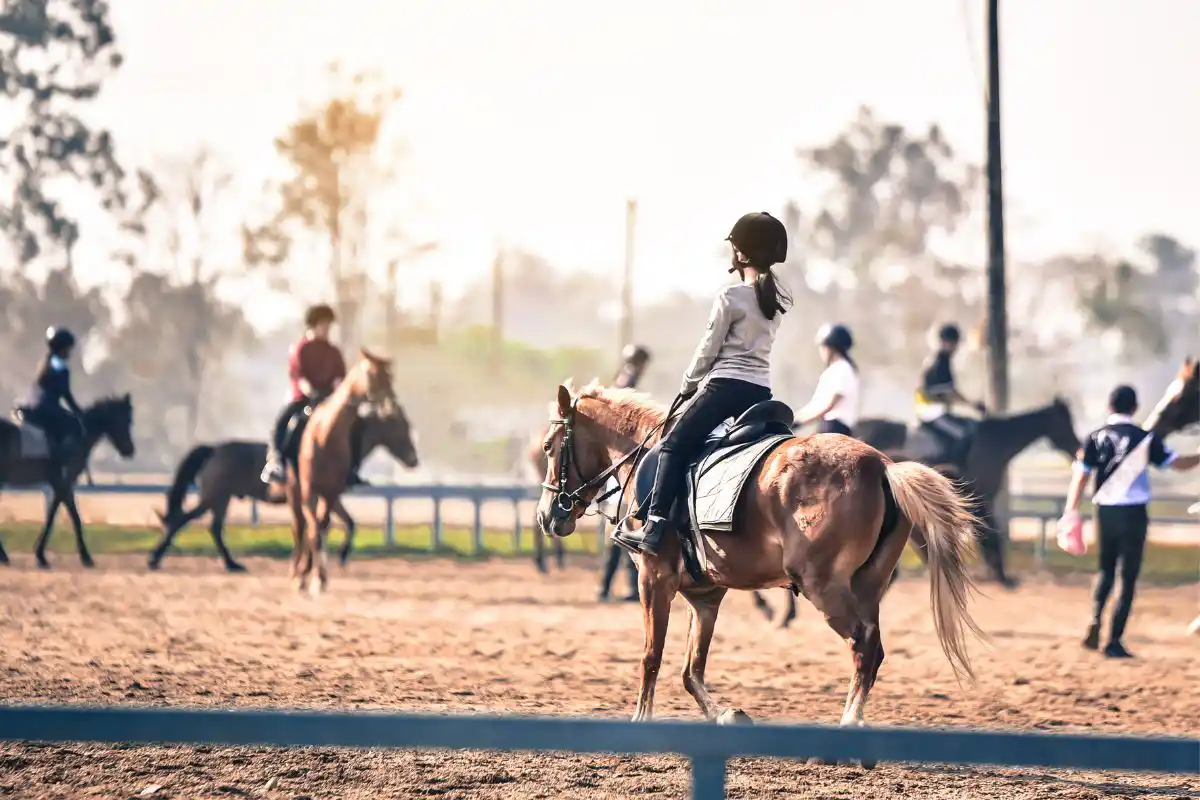
Horses are flight animals, meaning they react first and think later when something startles them. With the average horse weighing between 900–1,200 pounds, learning about safety is imperative, which is why it is at the very top of our list of beginner horseback riding tips. From how to approach a horse to finding your way around a horse, the proper gear to wear, and how to stay safe in the saddle, safety should be the very first thing you learn. An experienced rider will always approach a new horse with caution. Why? Because like people, every horse has its own personality, likes, and dislikes. Respecting their individuality and boundaries can mean the difference between a good time and an injury. Make it a priority to familiarize yourself with the horse’s body language, gaining insight into its mood and potential reactions. Understanding how to approach, handle, and groom a horse can be a bit intimidating at first, so don’t be afraid to ask for help if you’re feeling nervous. Adhering to basic safety protocols not only safeguards you, but also contributes to a positive and stress-free environment for the horse.
The use of proper riding gear, including helmets and boots, cannot be overstated. Helmets protect the rider’s head in the event of a fall, mitigating the risk of serious injury. Additionally, wearing sturdy boots with a defined heel ensures a secure grip in the stirrups, preventing the foot from slipping through and potentially getting caught. As beginners immerse themselves in the world of horseback riding, a good understanding and commitment to safety lays the foundation for a secure equestrian journey.
Tip 2: Taking Riding Lessons
Riding lessons are the cornerstone of a great equestrian. Enrolling in riding lessons offers the opportunity to learn proper riding techniques, understand basic commands, and develop a correct riding posture. Contrary to popular belief, there’s a lot more that goes into riding than just sitting atop a horse and letting them do all the work. Riding is a team sport between horse and rider. It’s a 50/50 relationship that requires working together to accomplish a common goal. Beginners often underestimate this and the significance of good technique and posture. Proper riding technique involves understanding how to use reins, legs, and body movements to communicate with the horse effectively, which takes time and practice to appear as effortless as experienced riders make it seem… because learning to balance and distribute your weight atop a moving horse while providing clear cues and being aware of your surroundings is no easy feat. It takes coordination, focus, and physical stamina—and your body will feel it.
When you take lessons, a professional instructor will teach you everything you need to know to become a good rider and partner to your horse, identifying and correcting mistakes early on to prevent them from becoming bad habits. Consistency is key, so commit to regular lessons to reinforce learning and build confidence in the saddle. Additionally, instructors can tailor lessons to individual skill levels, fostering a supportive environment for beginners to ask questions and seek guidance. Remember, investing time in riding lessons is an investment in your overall riding ability and, most importantly, in the safety and well-being of both you and your equine partner.
Tip 3: Understanding Basic Riding Commands

Mastery of basic riding commands is the linchpin of effective communication between horse and rider. Beginners must grasp the fundamental cues that guide the horse’s movements, ensuring a harmonious and controlled riding experience. Familiarity with rein pressure, leg aids, and voice commands will allow you to convey what you need from your horse so that they can get the job done. This is why riding lessons are so important as they offer an invaluable opportunity to practice and refine these commands, enabling beginners to develop confidence in the saddle—which is absolutely vital considering how big and strong horses are. Understanding the nuances of basic riding commands not only enhances control but also deepens the connection between horse and rider. It’s a language that transcends words, allowing for a seamless and cooperative partnership that makes for a great time in the saddle. There’s really nothing else in the world quite like it. To connect with a horse on such an intimate level is an experience so profound, words simply cannot express. As a beginner, investing time in mastering these foundational cues will allow you to advance your training on the right hoof.
Tip 4: Developing Balance and Core Strength
Once you’re familiar with basic riding commands, it’s time to master the art of balance and core strength atop a horse. This is a transformative aspect of a beginner’s journey into horseback riding. It’s also one of the more difficult skills to master on our list of beginner horseback riding tips. Your ability to maintain stability in the saddle directly correlates with the horse’s responsiveness and the overall riding experience. Even the fittest beginners will feel sore after lessons and discover muscles in places they didn’t even know they had. Riding is a full body workout that you’ll feel from head-to-toe, and your core is the powerhouse. Engaging the core muscles not only fosters an upright posture but also provides a solid base for subtle yet effective communication with the horse.
Riding is a dynamic activity that requires the rider to adapt to the horse’s movements, making balance a key component of a rider’s skill set. Specific exercises, both on and off the horse, can aid in developing these essential attributes. As a beginner, focus on enhancing your balance and core strength. Search for fun core workouts on YouTube or social media apps like TikTok and Instagram or head to the gym. Not only will it improve your core strength and help your riding, it’ll also contribute to your overall well-being. It’s an investment that pays dividends in and out of the saddle in the form of increased confidence, control when riding, and a deeper connection with your body.
Feeling sore after your lessons? Take a hot bath with Epsom salts, stretch, and drink lots of water to flush out the lactic acid your muscles produced during your ride. Trust us, your body will appreciate it!
Tip 5: Build a Bond with Your Horse

Beyond the technicalities of riding lies the heart of becoming an equestrian—the bond between horse and rider. Love for the horse and the chance to form a relationship that few people will ever truly understand, that’s why every single one of us gets involved. Whether you’ve wanted to ride since you were little or became interested later in life, the feeling is no less captivating. As a beginner, building a strong connection with a horse is as important as mastering riding skills. Grooming sessions, shared moments outside the saddle, and mutual respect form the foundation of this relationship. Taking the time to understand your horse’s preferences, quirks, triggers, and personality to create a bond built on trust and familiarity.
Depending on the barn where you take lessons, you may be matched up with a school horse you’ll ride consistently, or you’ll ride different horses each time. This all depends on the equestrian facility, what the instructor thinks is best, and the number of school horses they have available in their lesson program suited to your height and level.
Either way, be sure to invest in non-riding interactions as much as possible as they foster a sense of companionship that goes beyond the arena. A well-nurtured bond not only enhances communication during rides but also contributes to a harmonious partnership, making your horseback riding journey a much more rewarding and enriching experience—and the horse(s) you ride will appreciate it, too. So spend time with them, play with them, figure out what treats they absolutely love, what they’re scared of, where they like to be scratched, and show them that you care. A horse that feels loved will give you their heart, and there’s no better feeling than that of being loved by a horse.
Tip 6: Practice Patience and Consistency
For beginners, learning to ride is not just a skill acquisition but a journey that demands both time and dedication. This is further down on our list of beginner horseback riding tips because rider’s usually become aware of it with time. Horses, being sensitive and intuitive animals, respond positively to riders who approach their training with patience. Understanding that progress may come in small increments, beginners must resist the urge to rush the learning process. Learning to ride and making it look easy isn’t something that happens overnight. Your body needs to build strength and endurance. Consistent practice, coupled with a patient mindset, is the key to improvement here. Every moment spent in the saddle contributes to refining your skills and deepening your connection with the horse. Reward yourself by celebrating the small victories along the way; doing so will improve your confidence and fuel your motivation to grow as an equestrian so you can continue building your bond with your equine partner.
Make sure to leave any negative emotions at home or the barn’s entrance. Don’t bring that energy into the barn. Horses are extremely receptive to our emotions and vibrations and studies have found they can even detect our heart rate as we approach them. If you’re mad or frustrated, take the day off to prevent transferring your emotions onto your horse. It’s not fair to them and will only make things unpleasant for you and everyone else. It’s perfectly ok to take a couple of days off, as long as two days doesn’t turn into two months. Give yourself a break but stay consistent in your training so you don’t lose your forward momentum. As you navigate the ups and downs of your journey, embracing patience and consistency ensures a gradual evolution into becoming a confident and skilled equestrian. Just think, one day you’ll make riding without stirrups look like a walk in the park.
Tip 7: Be Mindful of the Environment

Another crucial aspect is cultivating a heightened awareness of your surrounding environment. This is something that can easily be overlooked, which makes it all the more important to include in our list of Beginner Horseback Riding Tips. Riding isn’t just about mastering yourself and the horse; it’s also about navigating varied terrains and being attuned to the conditions around you. If you’re riding in an arena, watch out for others around you. Be mindful of your horse’s footing so they don’t slip or step into a hole resulting in injury. And check the weather before you ride. This cannot be overstated enough. When you sign up to become an equestrian, you also unknowingly agree to become a meteorologist. Why? Because the weather plays a key role in your surroundings and even your horse’s mood.
Always check the weather before mounting. Avoid riding in excessive heat that can lead to one or both of you overheating; windy conditions that cause trees and shrubs to sway and scare the flighty animal beneath you—that will 100% flee with or without you if they sense even an ounce of danger; and rain that can make it hard to see, cause unsafe terrain, and just make things super uncomfortable. Learning to ride is challenging enough in good weather, don’t make it harder on yourself by riding in unfavorable, dangerous conditions. Understanding how environmental factors influence a horse’s behavior will allow you to anticipate and react appropriately during rides.
Riding is a dynamic interaction with nature. Developing mindfulness of your surroundings will contribute to your safety and the overall well-being of the horse. By instilling this environmental consciousness, beginners lay the groundwork for a more enjoyable and responsible ride. Additionally, awareness of your environment fosters a responsible and respectful approach to sharing space with others.
Takeaway
The journey for beginner horseback riders is a tapestry woven with excitement, challenges, and the forging of a profound connection between horse and rider. These seven essential beginner horseback riding tips provide a roadmap, guiding you toward a safe, enjoyable, and fulfilling equestrian journey. From basic riding commands to building strength and developing a bond with the horses that make it all possible, each tip plays a pivotal role in shaping your proficiency and confidence as a rider.
Safety, patience, and consistency underscore the foundation of this journey, ensuring that as a beginner embarking on this adventure, you do so with a commitment to responsible and enjoyable riding. Ask lots of questions and don’t be afraid to ask for help. We’ve all been there! As you become attuned to your horse’s needs and your own evolving skills, you’ll unlock the door to a world of epic experiences. Whether that means going on sunset beach rides, participating in competitions, or both, the key is to embrace the journey as it unfolds before you.
 About
About Subscribe
 Contact
SHOP OUR MARKETPLACE
Redingote Insulated Bib Overalls 2.0 – Caviar
Dressage Bit Motif Table Runner
Equimute Bonnet Inserts
Soft Rope Halter-Big Diamond Braided Overlay- Horse Training Halter
VIEW ALL PRODUCTS >